


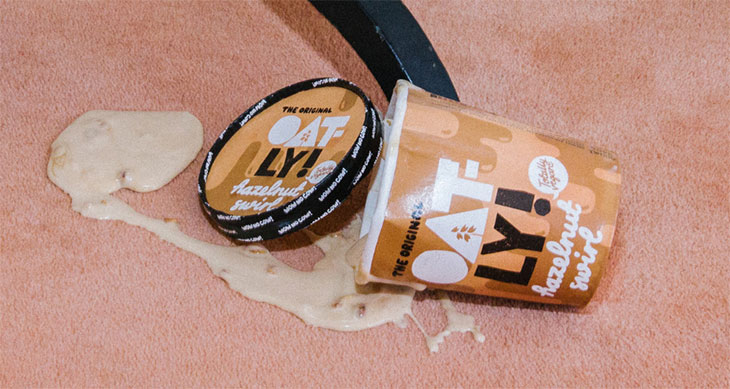
29 Jul 2025 The rebound of dairy milk
What Oatly’s struggles signal for the plant-based milk category….
In 2021, oat milk seemed unstoppable. Swedish company Oatly debuted on the Nasdaq with significant fanfare, opening 22% above its listing price and reaching a market cap of nearly $15-billion.
Backed by high-profile investors such as Oprah Winfrey and Jay-Z, and supported by attention-grabbing marketing campaigns — including a Super Bowl ad — Oatly was the face of a booming plant-based dairy alternative market.
Oat milk had already won the favor of coffee professionals, who touted its frothing ability and neutral flavour profile. Its surge in popularity was reflected in product shortages, especially in key café markets like the UK.
For a moment, traditional dairy appeared to have been decisively outpaced by its non-dairy counterparts.
But in a stark reversal, Oatly’s fortunes have changed significantly. Since its IPO, the company’s stock has declined more than 97%, impacted by a combination of slowing sales, operational challenges, and intensifying competition.
Current marketing efforts reflect a shift in tone — from bold and disruptive to promotional and conciliatory. Recent campaigns in London, including free giveaways and tongue-in-cheek ads like “I love Oatly in coffee — if I don’t know it’s Oatly”, suggest a brand recalibrating its identity in a more competitive and less forgiving market.

Meanwhile, rivals in the category are adopting increasingly unconventional strategies. UK-based brand Minor Figures, for example, has launched a new “HYPER OAT” range, billed as a “colourful, functional, flavour-forward collection” enriched with calcium and protein, attributes that, interestingly, traditional dairy has long offered as standard.
As oat milk brands move from disruptor to incumbent, they face the challenge of maintaining relevance in a crowded, maturing category. Oatly’s trajectory underscores the difficulties of sustaining brand momentum and investor enthusiasm in a segment that once seemed primed for exponential growth.
At the same time, dairy — once viewed as a legacy category in long-term decline — is seeing modest signs of revival. According to recent US data, whole milk sales increased by 3.2% last year, only the second annual increase since the 1970s.
This shift may be tied to changing consumer preferences: younger consumers are expressing skepticism toward overly processed foods and showing renewed interest in nutrient-dense options, including those higher in natural fats and proteins.
For food and beverage businesses, the message is twofold. First, the plant-based category remains important, but it is evolving, with a need for greater innovation, transparency, and functionality. Second, established categories like dairy should not be underestimated — especially when they begin to align with emerging consumer priorities around health, ingredient simplicity, and value.
As the market recalibrates, brands on both sides of the dairy divide must think carefully about how they communicate value, build loyalty, and differentiate in an increasingly discerning marketplace.
Source: The Telegraph, with creative help from Chatgpt.com
Related reading:
For Oatly, Execution Has Been the Biggest Problem – The Food Institute