

25 May 2026 Packaged water vs refill water – and why the difference matters
Not all water sold in South Africa is equal before the law or before science….
Packaged water is classified as a food product and subject to rigorous controls. Refill water operates in a largely unregulated grey area. Most consumers have no idea there is a difference.
SANBWA (the SA National Bottled Water Association) outlines the very distinct differences.
THE LEGAL DISTINCTION
Packaged water must meet strict food-safety requirements. SANBWA members comply with the SANBWA Packaged water Standard that is benchmarked against international standards including FSSC 22000, ISO 22000, GFSI and BRC.
Refill water is classified as drinking water under SANS 241 (the same standard as tap water) and falls under the Department of Water and Sanitation – overseen by municipal Environmental Health inspectors.
There are no legislated requirements governing what treatments are permitted and no mandatory batch testing or traceability.
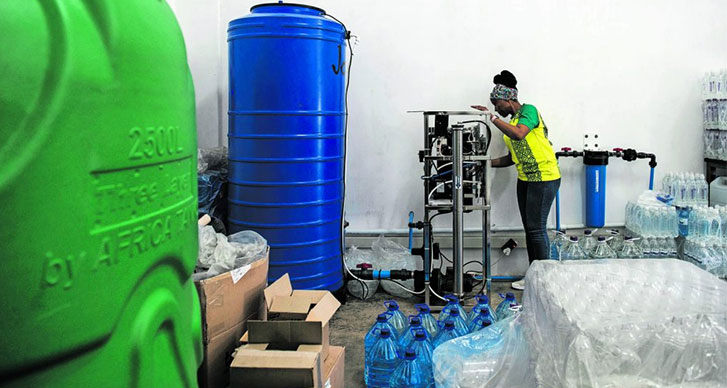
The critical legal line: When a refill operator pre-fills, seals and labels a bottle for retail sale, that product legally becomes packaged water and all food legislation applies. Many refill operators cross this line without complying with the law.
AT A GLANCE: THE KEY DIFFERENCES – PACKAGED WATER
- Governed as a food product (FC&D Act)
- Produced in a certified food-safety facility
- Source verified by qualified hydrogeologist
- Batch tested for microbes and chemicals
- Full traceability; recall is possible
- Verified shelf life and Best Before date
- Mandatory labelling: source, treatments, manufacturer
- Annual independent audits (SANBWA members)
REFILL WATER
- Governed as drinking water (SANS 241)
- Produced in a kiosk, shop or restaurant
- Source often unverified or unprotected borehole
- Minimal or no testing per batch
- No batch coding; recall is impossible
- No verified shelf life; safe only for on-consumption
- May not be labelled as a food product at all
- No audit requirement
THE PRE-FILLING PROBLEM
While SANBWA is concerned about refill stations that fill a consumer’s own container on the spot, it’s larger worry is pre-filling: operators who fill, seal and label bottles in advance and sell them as if they were packaged water.
In both cases the consumer is duped into thinking or assuming that the product is the same quality as packaged water without any guarantees or oversight of consumer safety.
Pre-filled refill water typically has:
- No verified water source
- No validated shelf life
- No batch traceability; if something goes wrong, there is no recall system
- No evidence of proper equipment sanitising
- No clear manufacturer accountability
- No reliable labelling with treatment or origin information
“Consumers may believe they are purchasing safe, packaged water when, in reality, they are exposed to a product with no traceability, unknown shelf life and significant contamination risks. Without proper regulation, consumer confidence in the safety of their drinking water will continue to erode.”
Charlotte Metcalf, CEO, SANBWA
THE CONTAMINATION RISKS
- Once municipal chlorine is removed, as most refill stations do, the water has no residual protection against recontamination.
- Bacteria including Pseudomonas can thrive in equipment that is not properly sanitised between users and E coli can also be present due to direct human contact in handling of equipment and bottles during filling.
- Consumers frequently handle filling nozzles and taps directly, increasing cross-contamination risk.
- Unlike packaged water, refilled water is not tested per production batch. There is no mechanism to trace contamination back through the supply chain if a consumer becomes ill.
WHAT SANBWA IS CALLING FOR:
- Consistent enforcement of existing food-safety law against operators who pre-fill and retail sealed bottles.
- Minimum standards for all refill stations, including source verification, equipment sanitising and testing requirements.
- Clear consumer communication distinguishing packaged water from refilled drinking water.
- Collaboration between the Department of Health, municipal Environmental Health authorities and industry.
CONSUMER GUIDANCE
If you use a refill station: fill your own clean container on the spot.
Do not buy pre-filled, sealed and labelled bottles from refill shops unless they can demonstrate compliance with packaged water regulations.
When buying bottled water: look for the SANBWA mark. It means the product is tested, traceable and legally compliant from source to shelf.
Source: SANBWA