



04 Feb 2026 Not quite red, not quite white… it’s blouge!
Why “blouge”, a new, playful style of wine is delighting drinkers…..
Is it red, or is it white? A growing number of winemakers are embracing a style that deliberately blurs the line. By co‑fermenting red and white grape varieties, producers are creating wines with the freshness of a white and the texture of a light red — a combination that’s resonating strongly with younger, flavour‑curious drinkers.
One of the early champions is Alsace winemaker Christian Binner, whose Côtes d’Amourschwihr Pinots blends pinot gris with pinot noir. Served slightly chilled, it delivers crispness and lift alongside gentle structure.
Binner jokingly calls the style “blouge”, a mash‑up of blanc and rouge, and he’s far from alone in exploring this hybrid approach.
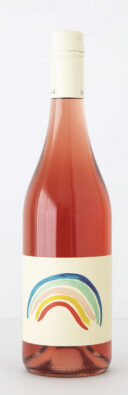
Winemakers worldwide are experimenting with red–white blends
Although France remains the centre of innovation, mixed‑variety ferments are now appearing across the world’s major wine regions.
- Languedoc, France: Aubert & Mathieu’s Boogie Woogie blends grenache noir and grenache gris (in main pic).
- Sonoma, US: Las Jaras Wines’ Superbloom combines chenin blanc and viognier with carignan and grenache noir.
- Adelaide Hills, Australia: Gentle Folk’s Rainbow Juice brings together sangiovese, pinot gris, gewürztraminer and sauvignon blanc (left).
- Bordeaux, France: Jacques Lurton’s recently launched “J” cuvée mixes cabernet franc and sauvignon blanc, positioning itself as a modern expression of the trend.
While co‑fermenting red and white grapes is not new — Champagne, Northern Rhône syrah and traditional Chianti all rely on it — today’s producers are intentionally crafting lighter, fresher, more playful wines designed to broaden appeal and challenge category norms.
SA producers are joining the movement
South Africa’s innovative winemakers have been quietly experimenting with similar mixed‑ferment styles, often driven by climate realities and a desire to offer fresher, lower‑alcohol wines. Examples include:
- Radford Dale (Stellenbosch): Known for blending white varieties into lighter‑style reds to boost acidity and freshness.
- Testalonga (Swartland): Craig Hawkins has produced small‑batch, boundary‑pushing blends that occasionally mix red and white grapes for texture and aromatic lift.
- Lower‑alcohol “new wave” producers in the Swartland and Cape South Coast regions are increasingly trialling co‑ferments to maintain balance in warmer vintages.
While not always marketed under a catchy label like “blouge”, the technique is gaining traction among SA’s younger, more experimental winemakers — and is finding favour with consumers seeking vibrant, chillable styles.
A style aligned with shifting consumer preferences
The rise of lighter reds and rosés has created fertile ground for this hybrid category. According to IWSR insights, wines that combine red and white grapes tend to offer a more energetic, approachable profile than many traditional reds, while delivering more food‑pairing versatility than rosé.
Lower alcohol levels also appeal to younger drinkers who favour sessionable, easy‑drinking options.
Because these blends often fall outside strict regional rules, many are sold under broader classifications such as “Vin de France”. Purists may dismiss them, but the target audience — younger, adventurous consumers — is responding enthusiastically. Aubert & Mathieu, for example, reported a 40% year‑on‑year increase in sales of Boogie Woogie in 2025.
A practical tool for climate adaptation
Beyond stylistic appeal, mixed red–white ferments offer technical advantages in a warming climate. Rising temperatures accelerate sugar accumulation in grapes, while phenolic ripeness can lag behind. This creates a dilemma: harvest early and risk green tannins, or harvest late and produce high‑alcohol, low‑acid wines.
Blending in white grapes helps restore balance by boosting natural acidity, moderating alcohol, adding aromatic lift, and allowing staggered harvest dates for greater flexibility.
For many producers, this approach is becoming a valuable tool for maintaining freshness and drinkability in hotter seasons.
A category still defining itself
Despite growing interest, the segment remains too small for formal tracking, and there is no universally accepted name.
Some producers embrace playful branding; others simply market their wines as “light red” or “chillable red”. Retailers and restaurants are beginning to recognise the style as a distinct offering, which may help accelerate consumer adoption.
As winemakers continue to innovate and drinkers seek out fresher, more relaxed styles, mixed red–white ferments look set to evolve from niche curiosity to a recognised category — with South Africa well‑positioned to contribute to its growth.
Source: The Economist