


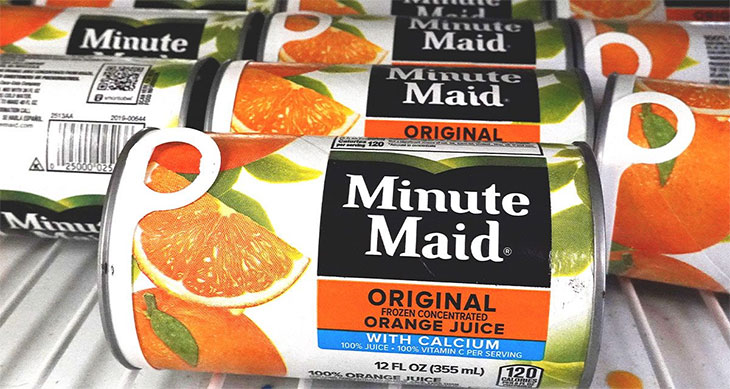
14 Mar 2026 Goodbye Minute Maid frozen orange juice
Coca-Cola is discontinuing its range of frozen products, including its iconic frozen orange juice concentrate that was first introduced in 1946…..
Minute Maid’s decision to discontinue its frozen orange juice concentrate marks the quiet end of a product that helped define the modern juice category.
After eight decades in freezers across North America, parent company Coca‑Cola is exiting the frozen can segment entirely, citing shifting consumer preferences and a strategic pivot toward formats with stronger growth.
A product that shaped the juice industry
Frozen orange juice concentrate wasn’t just another SKU — it was a post‑war innovation that transformed how Americans consumed juice. In 1946, Vacuum Foods Corporation (later renamed Minute Maid) became the first US company to ship frozen concentrated orange juice nationwide, making orange juice a year‑round staple rather than a seasonal luxury.
The format offered several advantages at the time: long shelf life and easy storage, lower shipping costs thanks to reduced water content, consistent flavour compared to early preservation methods, and a convenient alternative to squeezing fresh fruit at home.
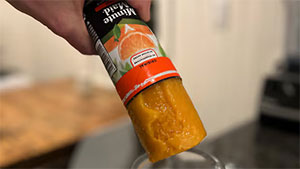
By the 1950s and 60s, the frozen cylinder — famously dropped into a jug with a satisfying ker‑plunk — had become a fixture in kitchens around the globe.
The category expanded into lemonade, limeade and fruit punch, and remained a nostalgic staple for generations.
Why the frozen category declined
The discontinuation reflects a convergence of long‑running pressures on both the orange juice category and the frozen concentrate format.
A shift to ready‑to‑drink formats: The introduction of refrigerated, ready‑to‑drink orange juice in the 1970s and 80s allowed consumers to skip the mixing step entirely. Over time, this convenience reshaped expectations and eroded the relevance of frozen concentrate.
Changing beverage preferences: Consumers have diversified away from traditional juices toward energy drinks, flavoured waters, smoothies and functional beverages. Juice, especially orange juice, has struggled to maintain share in this increasingly fragmented landscape.
Price inflation and supply volatility: Weather‑related crop issues in Florida and Brazil have driven up orange juice prices dramatically. A 12‑ounce can of frozen concentrate averaged $4.82 in December 2025, up 13% year‑on‑year, making the once‑affordable option less compelling.
Health perceptions around sugar: As scrutiny of sugar content intensified, many consumers reduced their juice intake altogether. Minute Maid responded with Zero Sugar fresh juice variants in 2020, but the frozen line did not benefit from the same reformulation momentum.
Category‑wide decline: US frozen beverage sales fell nearly 8% in the 52 weeks ending January 2026, underscoring a broader structural decline rather than a brand‑specific issue.
Minute Maid’s exit from frozen concentrates is emblematic of a category realignment driven by convenience, premiumisation and health‑driven shifts. For manufacturers, the message is clear: legacy formats must either evolve or cede space to products that better match contemporary consumption patterns.
And for consumers, it marks the end of a nostalgic product that once defined the promise of modern food technology.
Source: APNews.com
Frozen orange juice used to be everywhere. Why did we stop buying it?
For decades frozen orange juice was the very image of American abundance. Frozen orange juice was born in the aftermath of World War II, a symbol of the good life and a drink full of vitamins that was seen as part of a healthy breakfast for Baby Boomer families.
But walk through a grocery store now, and you might not catch sight of one of the signature juice cylinders at all…..
AOL.com: Read the full article here