


06 May 2026 Finally, a can that seals!
Many have tried and most have stumbled… but could this be the real, viable thing? A drinks can that is truly resealable?
Aluminium cans have long been the workhorse of the beverage industry: lightweight, endlessly recyclable, and cost‑efficient. But they’ve always had one major flaw — once opened, they spill, they go flat, and they can’t be closed again.
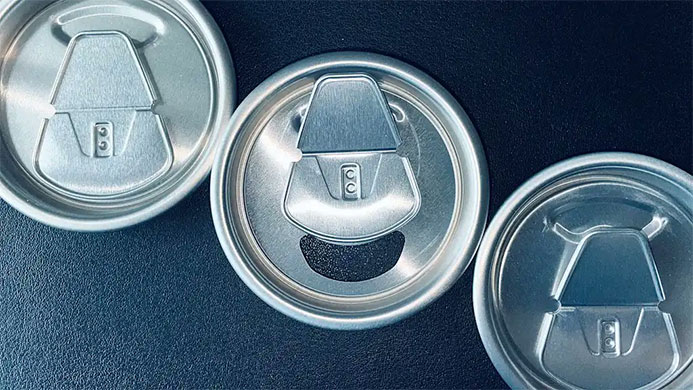
Now, a new innovation from ReLid is attempting to solve that decades‑old problem with a fully recyclable, leak‑proof, resealable aluminium can top that drops straight into existing filling lines.
It’s a deceptively simple idea with potentially transformative consequences for beverage manufacturers.
A resealable can without plastic
ReLid’s design replaces the traditional pull‑tab with a patented sliding mechanism that allows consumers to open and close the can multiple times.
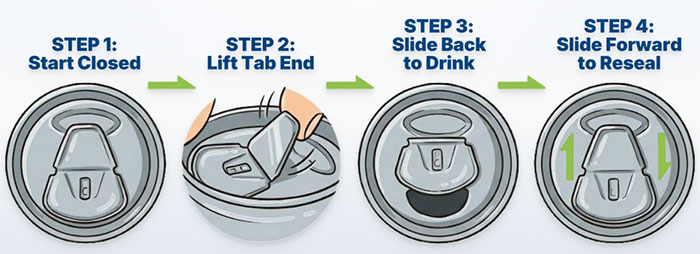
The user lifts the tab, slides it open to drink, and then slides it back to reseal — a system the company says can withstand at least 14 reseals without compromising performance
Crucially, the entire mechanism is made from aluminium, with no plastic components. This gives ReLid a clear sustainability advantage over previous resealable can concepts, including those used by Monster Energy, which relied on plastic closures.
The technology was originally developed by Re‑Lid Engineering AG in Liechtenstein, beginning in 2020, before being licensed to ReLid USA for the North American market.
The US team, based in Illinois, has focused on scaling the design for mass manufacturing while ensuring recyclability and ease of use.
Designed to fit existing filling lines
One of the biggest engineering challenges was ensuring the new lid could be integrated into standard canning infrastructure without slowing production or requiring costly retrofits. As ReLid USA CEO Bill Brandell explains, the product had to “drop in to the current beverage‑filling infrastructure without impacting the existing can‑filling process”
The lid also needed to maintain seal integrity under pressure changes from carbonation and temperature shifts — a critical requirement for carbonated soft drinks, energy drinks, and ready‑to‑drink coffees
The result is a resealable top that behaves like a traditional can during filling, transport, and storage, but offers consumers the convenience of a bottle once opened.
A functional upgrade — and a branding opportunity
Beyond practicality, ReLid’s design offers a new point of differentiation for beverage brands. A resealable can is not only functional; it’s visually distinctive, giving brands a packaging feature that stands out on shelf and supports premium positioning.
ReLid is actively marketing the technology to manufacturers looking to justify higher price points or create memorable packaging moments
The first commercial rollout will come via LA Libations, which will use ReLid tops on canned water sold exclusively at Gelson’s in Southern California.
For now, production is handled by a German line capable of producing one million cans per month, with ReLid planning to open a U.S. manufacturing facility later this year to support broader adoption.
What this means for beverage manufacturers
ReLid arrives at a moment when beverage companies are under pressure to reduce plastic, improve recyclability, and differentiate in crowded categories. A fully aluminium resealable can checks all three boxes:
- Sustainability: With no plastic components, the lid aligns with corporate commitments to reduce plastic waste and improve circularity.
- Convenience: Resealability opens new consumption occasions — from sports and outdoor use to on‑the‑go drinking — where cans have historically underperformed.
- Premiumisation: Unique packaging supports higher‑margin innovation, especially in categories like energy drinks, RTD coffee, functional beverages, and alcohol.
If ReLid can scale production and maintain cost competitiveness, the technology could become a new standard for brands seeking both environmental credibility and consumer‑friendly functionality.
Source: FastCompany.com, ReLid USA